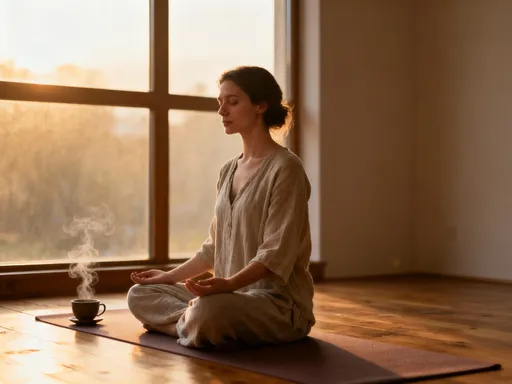
How I Found Calm in Just 10 Minutes a Day — My Simple Yoga & Meditation Routine
Ever feel like your mind won’t shut off? I did too—until I tried a simple yoga and meditation practice rooted in traditional Chinese wellness principles. No fancy gear, no hours of effort. Just 10 minutes a day made a noticeable difference in how I sleep, focus, and handle stress. This isn’t about perfection; it’s about showing up. Here’s the real, no-fluff routine that actually stuck—and how you can make it work for your life.
The Burnout That Changed Everything
For years, I prided myself on being busy. A full-time job, raising two children, managing household schedules—I wore my exhaustion like a badge of honor. I exercised regularly, ate what I thought was a balanced diet, and got by on six hours of sleep. But beneath the surface, I was running on empty. My energy would crash by mid-afternoon. I struggled to fall asleep, even when I was physically tired. My thoughts raced constantly, and small setbacks felt overwhelming. I wasn’t just tired; I was emotionally drained and mentally scattered.
At first, I blamed it on aging or the demands of modern life. I tried increasing my cardio, cutting out sugar, even taking supplements. But nothing addressed the root of my fatigue. The turning point came during a routine visit to a holistic wellness clinic, where a practitioner introduced me to the concept of yangsheng—a traditional Chinese approach to health preservation. Unlike Western models that often focus on treating illness or optimizing performance, yangsheng emphasizes prevention, balance, and living in harmony with natural rhythms. It wasn’t about pushing harder; it was about restoring what had been lost through constant doing.
This idea resonated deeply. I realized that my high-intensity workouts, while good for cardiovascular health, weren’t helping my nervous system recover. In fact, they were adding to the strain. My body needed restoration, not more stimulation. The practitioner explained that chronic stress depletes qi—vital energy—and when qi is low, the organs function less efficiently, sleep suffers, and emotional resilience declines. Instead of more effort, I needed gentle, consistent practices that nurtured my body and mind. That’s when I began exploring a daily 10-minute routine combining simple yoga and meditation.
Why Simplicity Works: The Wisdom Behind Chinese Wellness
One of the most profound shifts in my journey was redefining what health means. In many Western fitness cultures, success is measured by intensity—how fast you run, how much you lift, how many calories you burn. But traditional Chinese health preservation, or zhongyi yangsheng, operates on a different principle: balance. It views the body as an interconnected system where physical, emotional, and energetic health are deeply linked. Rather than chasing extremes, the goal is harmony—between activity and rest, effort and ease, yin and yang.
This philosophy is rooted in thousands of years of observation and practice. According to Traditional Chinese Medicine (TCM), health depends on the smooth flow of qi through meridians, or energy pathways, which are connected to specific organs and functions. When qi becomes blocked or depleted, discomfort or illness can arise. But rather than waiting for symptoms to appear, yangsheng encourages daily habits that support qi flow and prevent imbalance. These include mindful movement, proper breathing, seasonal eating, and emotional regulation—all simple, accessible practices that don’t require special equipment or expertise.
What makes this approach sustainable is its emphasis on consistency over intensity. A five-minute breathing exercise done every day is more valuable than an hour-long session once a week. Small actions, repeated over time, create lasting change. This was a revelation for me. I no longer had to feel guilty for not having time to work out for an hour. Instead, I could honor my body by showing up for just a few minutes with presence and care. Over time, these moments accumulated into real shifts—better sleep, clearer thinking, and a greater sense of calm.
Yoga Meets Qi: Blending Movement with Energy Awareness
When I first started, I assumed yoga meant complex poses and extreme flexibility. But I soon learned that gentle, mindful movement is especially effective for supporting qi flow and calming the nervous system. Unlike vigorous exercise, which activates the sympathetic nervous system (the “fight or flight” response), slow, intentional yoga postures engage the parasympathetic system—the “reset” button that promotes relaxation, digestion, and recovery.
In the context of Chinese wellness, certain movements are believed to stimulate specific meridians. For example, spinal twists gently compress and release the organs, aiding digestion and detoxification, while forward bends calm the mind and support kidney energy, which in TCM is linked to vitality and resilience. The key is not perfection in form, but awareness in motion. Moving with the breath—inhaling to expand, exhaling to release—creates a rhythm that synchronizes body and mind, reducing mental chatter and enhancing energy flow.
My routine includes three foundational poses, each chosen for its accessibility and impact. Child’s Pose is my go-to for instant grounding. Kneeling on the floor, hips back, forehead resting on the mat, arms extended or alongside the body, this posture gently stretches the back and hips while encouraging deep, diaphragmatic breathing. It’s especially helpful in the evening, signaling to the body that it’s time to slow down.
Cat-Cow is a flowing sequence that warms up the spine and improves circulation to the nervous system. On hands and knees, I alternate between arching the back (Cow) and rounding it (Cat), coordinating each movement with the breath. This simple motion helps release tension in the neck and lower back, common areas where stress accumulates.
Seated Forward Bend is another favorite. Sitting with legs extended, I hinge from the hips to reach toward my toes, keeping the back long. This pose calms the nervous system and supports liver and gallbladder meridians, which in TCM are associated with emotional regulation and detoxification. I use a cushion under my hips if needed and never force the stretch—the goal is gentle release, not flexibility.
Meditation Without the Mystique: Real Practice, Real Results
For a long time, I avoided meditation because I thought it required emptying the mind completely—a task that felt impossible. But I later learned that meditation isn’t about stopping thoughts; it’s about changing your relationship with them. Drawing from Daoist-inspired practices, I adopted two simple techniques: breath counting and body scanning. Both are concrete, easy to learn, and don’t require any special belief system.
Breath counting is exactly what it sounds like: silently counting each inhale and exhale, up to ten, then starting over. When my mind wanders—and it always does—I gently return to one. This practice builds focus and trains the mind to return to the present moment. Over time, I noticed that I could catch myself spiraling into worry and consciously bring my attention back to my breath, even outside of meditation.
Body scanning involves slowly bringing awareness to different parts of the body, starting from the toes and moving up to the head. I don’t try to change anything—just notice sensations, tension, or warmth. This practice increased my body awareness and helped me recognize early signs of stress, like clenched jaws or tight shoulders, before they turned into full-body fatigue.
What surprised me most was how quickly benefits appeared. Within two weeks of practicing just five minutes a day, I felt more centered. I reacted less impulsively to stressful situations. My sleep improved because my mind wasn’t racing at bedtime. And during the day, I could focus better on tasks without feeling overwhelmed. These weren’t dramatic transformations, but subtle, cumulative shifts that made daily life feel more manageable.
My Daily 10-Minute Routine (Step-by-Step)
The beauty of this practice is its simplicity and adaptability. I structured my 10 minutes to fit into my existing routine, making it easy to maintain even on busy days. In the morning, I do a short sequence to awaken my body and set a calm tone for the day. It starts with three minutes of gentle stretching—Cat-Cow, Child’s Pose, and Seated Forward Bend—moving slowly with my breath. Then, I sit comfortably and spend five minutes on mindful breathing, using the breath-counting method. Finally, I close with two minutes of gratitude reflection, silently naming three things I’m thankful for. This doesn’t have to be big things—a warm cup of tea, a child’s laugh, a sunny morning. This practice helps me start the day with a sense of abundance rather than lack.
In the evening, I switch to a wind-down sequence. I begin with gentle spine twists, lying on my back and letting my knees fall to one side while keeping my shoulders grounded. I hold each side for a few breaths, then switch. This helps release tension from the day and supports digestion. Next, I practice diaphragmatic breathing—inhaling deeply through the nose, letting the belly rise, and exhaling slowly through the mouth. I do this for four to five minutes, focusing solely on the rhythm of my breath. Finally, I close with a brief visualization: imagining a warm, golden light moving through my body, relaxing each part as it passes. This signals to my nervous system that it’s safe to rest.
To stay consistent, I don’t track progress in terms of depth of stretch or length of focus. Instead, I use a simple calendar and mark each day I practice with an “X.” The goal isn’t to achieve perfection, but to build a habit. Some days, my mind is busy, and I only complete half the routine. That’s still a win. The key is showing up without judgment. Over time, the habit became automatic, like brushing my teeth—something I do because it feels good, not because I have to.
Common Struggles and How I Fixed Them
Like anyone starting a new habit, I faced challenges. The most common excuse was “I don’t have time.” But I realized that even on the busiest days, I could find 10 minutes—often by waking up just a little earlier or skipping a few minutes of scrolling before bed. The real issue wasn’t time; it was priority. Once I reframed this practice as essential self-care rather than an optional add-on, it became non-negotiable.
Distraction was another hurdle. My mind would jump from grocery lists to work deadlines. Instead of fighting it, I learned to acknowledge thoughts without engaging them—like clouds passing in the sky. I also created a dedicated space for practice: a quiet corner with a yoga mat, a small candle, and soft lighting. This environment became a cue for my brain to shift into calm mode. Over time, just sitting in that space helped me transition into a meditative state more easily.
When motivation dipped, I shifted my mindset from “I should do this” to “I choose to care for myself.” This subtle change reduced guilt and increased compassion. I reminded myself that this wasn’t about achieving a goal, but about nurturing my well-being. On days when I felt resistance, I lowered the bar—sometimes just sitting and breathing for two minutes was enough. The practice wasn’t lost; it was preserved.
Building a Lifestyle, Not a Checklist
Over time, these 10 minutes a day began to influence the rest of my life. Mindfulness wasn’t confined to the mat; it spilled into everyday moments. I started walking more slowly, noticing the feel of my feet on the ground. I began eating meals without distractions, savoring each bite. Even washing dishes became a practice in presence—feeling the warmth of the water, the rhythm of scrubbing. These small acts of attention created pockets of calm throughout the day.
The biggest shift was moving from being stress-reactive to energy-proactive. Instead of waiting until I was exhausted to rest, I began to listen to my body’s signals earlier. A slight tension in my shoulders? Time to pause and breathe. Feeling mentally scattered? A quick body scan to recenter. This preventative approach, rooted in yangsheng, helped me maintain balance before burnout set in.
Looking back, this journey wasn’t about transforming my body or achieving enlightenment. It was about reclaiming a sense of calm in a chaotic world. By embracing simplicity through yoga and meditation grounded in Chinese wellness wisdom, I found a rhythm that fits real life. You don’t need hours or expertise—just the willingness to begin. And if I can do it, so can you.