Hidden Gems and Local Crafts: My Unfiltered White Stroll Through Ōgimachi’s Soul
You know that feeling when you stumble upon a place so untouched, it feels like stepping into a living postcard? That’s Ōgimachi in Shirakawa-go. Nestled in Japan’s misty mountains, this UNESCO village isn’t just about gassho-zukuri farmhouses—it’s a quiet playground for authentic discovery. I went not for malls, but for moments: handcrafted washi paper, warm *kami-ami* straw sandals, and smiles from artisans who’ve kept traditions alive for generations. This is shopping redefined—slow, meaningful, and deeply human.
First Impressions: Stepping into a Timeless Landscape
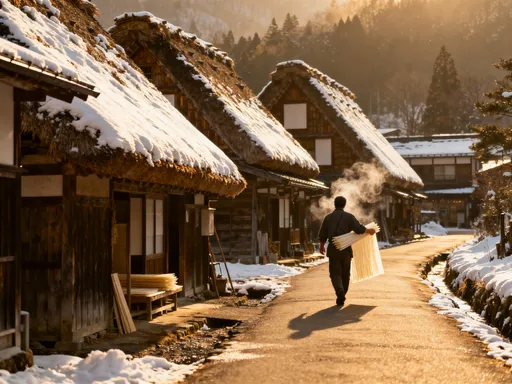
Arriving in Ōgimachi feels like crossing a threshold not only of space but of time. The final stretch of the journey winds through narrow mountain roads flanked by cedar forests, where fog often lingers in the early hours like a soft breath over the valley. As the village emerges into view, the first sight is unforgettable—the steep, thatched roofs of gassho-zukuri farmhouses rising like gentle hands in prayer above the tree line. These structures, some over 250 years old, are built without nails, their interwoven wooden frames designed to withstand heavy snowfall and centuries of quiet endurance.
Ōgimachi is small—just a few hundred residents—and its compact layout makes it ideal for unhurried exploration. A single main path traces the contours of the valley, with smaller footpaths branching off toward family homes, shrines, and craft workshops. There are no traffic lights, no billboards, and no chain stores. What you do see are wooden signposts with hand-painted characters, stone steps worn smooth by generations, and the occasional curl of smoke rising from a hearth inside a farmhouse. The village is part of the UNESCO World Heritage designation for Historic Villages of Shirakawa-go and Gokayama, recognized not only for its architectural uniqueness but for the living culture that continues to thrive within it.
Preservation here is not a museum exhibit but a daily commitment. Strict guidelines govern any repairs or modifications to homes, ensuring that every roof thatched with *kaya* grass, every timber beam replaced, follows centuries-old methods. Residents take pride in maintaining their heritage, and visitors are welcomed not as tourists but as temporary guests in a delicate ecosystem of tradition and continuity. It’s this sense of respect—for nature, for history, for community—that sets the tone for every experience in Ōgimachi, from the first footstep to the last farewell.
The Rhythm of Rural Craftsmanship
In Ōgimachi, craftsmanship is not a performance for cameras; it is the rhythm of everyday life. The concept of *shokunin*, or artisan, carries deep cultural weight in Japan. It implies not just technical mastery but a moral dedication to one’s work, a lifelong pursuit of perfection through humility and repetition. In this remote village, that spirit lives on in quiet workshops and family kitchens where skills are passed down like heirlooms, from grandparent to parent to child.
Among the most cherished traditions is the making of *washi* paper, a craft that dates back over a thousand years in Japan. In Ōgimachi, artisans harvest mulberry bark, boil it into pulp, and form sheets by hand using wooden frames and flowing river water. Each sheet carries subtle imperfections—variations in texture, thickness, and fiber distribution—that speak to its human origin. These papers are used for everything from calligraphy to lantern covers, and some are even layered to create durable fabrics or protective wrappings for delicate objects.
Equally vital is the art of *kayabuki*, or thatch roofing. With roofs that can weigh up to 30 tons, the maintenance of gassho-zukuri houses requires specialized knowledge. Every few decades, entire communities come together in a *yui*—a traditional cooperative effort—to re-thatch a home. Men climb the steep slopes with bundles of dried grass, weaving them layer by layer into a watertight, insulating shield. This practice is not only practical but deeply social, reinforcing bonds between neighbors and ensuring that the skill remains alive.
Indigo dyeing is another thread in this tapestry of rural artistry. Local women grow *tade-ai* plants, ferment them in wooden vats, and dip cloth repeatedly into the rich blue solution. The resulting textiles—scarves, aprons, napkins—carry the scent of earth and time. Unlike synthetic dyes, natural indigo deepens with age, growing richer with each wash. These crafts are not sold merely as souvenirs; they are expressions of identity, resilience, and connection to the land.
Shopping with Soul: Beyond Souvenir Stalls
Shopping in Ōgimachi is nothing like browsing in a tourist bazaar. There are no plastic trinkets, no neon signs, and no pushy vendors. Instead, commerce here unfolds in hushed tones and gentle gestures—behind wooden counters in converted farmhouses, at low tables inside family-run shops, or during quiet exchanges at open-house studios where visitors are invited to watch, listen, and learn before buying.
What makes these purchases meaningful is their authenticity. A wooden spoon carved from local chestnut wood isn’t mass-produced in a factory—it was shaped yesterday by a craftsman who still uses tools passed down from his father. A jar of herbal tea isn’t branded with flashy packaging; it contains dried yuzu peel, mugwort, or beni-koji, blended by hand in small batches and stored in cloth bags tied with twine. Even the sake served in village inns is brewed locally, often in quantities too small to leave the region.
One of the most rewarding experiences is visiting a *minka*—a traditional house—where a family opens part of their home to share their craft. In one such home, I watched a woman press dried flowers between sheets of washi to create translucent bookmarks. She spoke little English, but her smile and gestures made her pride clear. When I purchased a piece, she wrapped it in tissue paper with care, as if preparing a gift for a dear friend. These moments transform shopping from transaction to relationship.
Another highlight is the selection of functional art: lacquered bowls, woven baskets, hand-forged kitchen knives, and straw sandals known as *kami-ami*. These items are not decorative novelties but tools meant to be used, worn, and cherished over time. Buying them supports not a global supply chain but a local economy built on sustainability, seasonality, and respect for materials. In a world of fast fashion and disposable goods, Ōgimachi offers a powerful alternative—slow shopping, rooted in place and purpose.
Meet the Makers: Human Connections Behind the Products
What truly distinguishes Ōgimachi is the presence of the people—the artisans whose hands shape every object and whose stories give them soul. These are not performers in costume but real villagers living ordinary lives with extraordinary skills. Their workshops are often tucked into corners of their homes, visible through open doors as you walk by.
I remember stopping at a small stall where an elderly woman sat beside a basket of dried yuzu peels. With deliberate movements, she sorted them by size, then twisted them into tight coils to be steeped as tea. When I asked about the process, she smiled and showed me how the citrus was harvested in autumn, sun-dried for weeks, and stored in clay jars. She offered me a sample in a tiny paper cup—bitter, floral, warming. I bought a small pouch, and as she handed it over, she nodded slowly, as if acknowledging a shared understanding of care and patience.
Elsewhere, I met a woodworker in his seventies who spent his days shaping *koma*, traditional spinning tops made from single blocks of magnolia wood. Using a foot-powered lathe, he carved each one by hand, sanding it smooth until it gleamed. He told me—through a bilingual pamphlet and gestures—that he began learning the craft at age ten and now teaches it to his grandson. One top, painted with a delicate maple leaf, had been on display for months. “For someone who will appreciate it,” he said. I felt honored to take it home.
These interactions are brief but profound. They remind us that every product has a backstory—a season of growth, hours of labor, a lifetime of knowledge. When you buy directly from the maker, you’re not just acquiring an object; you’re supporting a legacy. You help ensure that a granddaughter learns how to weave, that a grandson inherits a lathe, that a tradition doesn’t fade into memory. In this way, mindful consumption becomes an act of preservation.
Seasonal Surprises: How Time of Year Shapes the Experience
Ōgimachi changes its character with the seasons, and each visit offers a different rhythm of craft and connection. Winter transforms the village into a snow-globe vision, with rooftops buried under thick blankets of white and warm light glowing from farmhouse windows. This is the time of the famous *light-up* events, when the village is illuminated one evening a month, drawing photographers and dreamers from around the world. During these nights, small indoor markets spring up, offering hot sake, grilled mochi, and limited-edition crafts—hand-stitched mittens, carved snowmen, candles wrapped in washi.
But winter is also a time of quiet intimacy. With fewer crowds during the day, visitors can linger longer in workshops, ask more questions, and even participate in simple craft demonstrations. One morning, I joined a session where a local woman taught us to weave small straw ornaments using leftover *kaya* grass. Though my attempt was clumsy, the experience grounded me in the tactile reality of the craft.
Spring brings thaw and renewal. The snow melts, revealing stone paths and budding cherry trees. Craft displays move outdoors, with wooden stalls set up along the main walkway. This is when indigo-dyed textiles are most abundant, fresh from the first fermentation vats of the year. Herbalists begin harvesting wild plants—fuki, warabi, sansai—and offer dried bundles for cooking or tea. The air carries the scent of damp earth and new growth.
Summer deepens the greenery, and the village hums with life. Farmers tend their fields, and artisans work in shaded courtyards. This is an ideal time to see thatch repair in progress, as families prepare their roofs for the rainy season. Visitors may witness a *yui*, the communal re-thatching event, where neighbors gather to lift bundles of grass onto the roof, singing as they work. Autumn, meanwhile, is harvest time—pumpkins, rice, persimmons—and craft shops offer special bundles: handmade paper wrapped with dried leaves, wooden boxes filled with seasonal teas, or sets of chopsticks carved with autumn motifs.
For those seeking unique finds without large crowds, the shoulder months of April and October are ideal. Mornings are best for shopping, when light filters gently through the trees and artisans are most active. Weekdays, especially outside national holidays, offer the most peaceful experience. No matter the season, each visit reveals a different layer of Ōgimachi’s soul.
Practical Magic: Navigating Ōgimachi with Ease
Reaching Ōgimachi requires a bit of planning, but the journey enhances the sense of arrival. The village is not accessible by train; the most common routes are by bus from Takayama or Kanazawa. From Takayama, the ride takes about 50 minutes along winding mountain roads—scenic but potentially challenging for those prone to motion sickness. Buses depart regularly, but it’s wise to check the schedule in advance, especially in winter when weather can cause delays.
Upon arrival, visitors enter through a small parking area and information center. From there, it’s a ten-minute walk down a gentle slope to the heart of the village. Comfortable walking shoes are essential—the paths are unpaved in places, and stone steps are common. While the village is compact, plan for at least two to three hours to explore at a relaxed pace.
One crucial tip: bring cash. Most small shops and family studios do not accept credit cards or digital payments. Yen in small denominations is especially useful for purchases like tea, snacks, or small crafts. ATMs are available in Takayama or nearby Gokayama, but not in Ōgimachi itself.
Etiquette is equally important. Ōgimachi is a living village, not a tourist park. Residents go about their daily lives—cooking, gardening, repairing homes—and visitors are expected to observe quietly. Photography inside homes or workshops should only be done with permission. Flash photography is discouraged, especially near artisans at work. Signs are minimal and often in Japanese, so a translation app can be helpful, but many shopkeepers understand basic English or use visual aids to communicate.
For those wishing to go deeper, guided walking tours are available through the visitor center. These are led by local residents or trained guides who share historical context and cultural insights. Some families also offer home stays or craft workshops, though these must be arranged in advance through official channels. Respecting the pace and privacy of the community ensures that tourism remains sustainable and that future generations can continue to experience Ōgimachi as it is meant to be—quiet, authentic, and deeply human.
Why This Kind of Travel Matters
Traveling to Ōgimachi is more than a scenic escape; it is a reminder of what we risk losing in an age of speed and standardization. In a world where convenience often trumps care, where products are detached from their origins, this village stands as a quiet testament to the value of slowness, intention, and human touch. Every purchase here is a vote for preservation—for the survival of crafts that take years to master, for the dignity of work done with pride, for the beauty of things made to last.
Mindful shopping fosters deeper cultural connection. It shifts the focus from consumption to communion. When you hold a hand-carved spoon or wear a straw sandal woven by an elder, you carry a piece of someone’s life, a thread of their story. You become part of a chain that stretches across generations, linking past to present, maker to user, place to person.
This kind of travel also supports sustainability in its truest sense—not as a marketing term, but as a way of life. The materials used in Ōgimachi’s crafts are local, renewable, and biodegradable. The energy is human, not industrial. The economy is small-scale, community-based, and resilient. By choosing to visit and support such places, travelers help protect not just buildings and techniques, but values: patience, humility, interdependence.
Slow tourism, as practiced in Ōgimachi, invites us to slow down, pay attention, and engage with depth. It asks us to value quality over quantity, meaning over convenience, presence over possession. In doing so, it enriches not only the destination but the traveler. We return home not with bags full of things, but with hearts full of moments—of smoke rising from a thatched roof, of hands shaping wood, of a smile shared across languages.
So seek out places like Ōgimachi—where commerce and culture coexist gently, where every object has a soul, and where the quiet hum of tradition reminds us of what it means to be human. Let your journeys be guided not by checklists, but by curiosity and respect. And in the end, may you find not just beauty in the world, but a deeper sense of belonging within it.