You Won’t Believe Calgary’s Hidden Architectural Gems
When you think of Calgary, wide-open prairies and the Rocky Mountains might come to mind—but not its architecture. I was surprised too. Wandering the city, I stumbled upon stunning designs blending old charm with bold modernity. From historic brick warehouses to sleek glass towers, Calgary’s architectural identity is quietly unforgettable. It’s not flashy, but once you notice it, you can’t unsee it. This is urban beauty with a whisper, not a shout.
First Impressions: Beyond the Skyline
Calgary is often introduced as a gateway to the Canadian Rockies, a city fueled by energy and outdoor adventure. Yet beneath its pragmatic reputation lies an urban fabric rich with architectural intention. Visitors expecting a skyline dominated solely by oil-company headquarters are in for a quiet revelation. The city’s built environment tells a layered story—one of resilience, reinvention, and understated elegance. While Banff draws millions with its alpine vistas, Calgary itself offers a subtler kind of awe: the kind found in the curve of a sandstone arch, the rhythm of brickwork on a forgotten warehouse, or the way sunlight dances across a glass façade at golden hour.
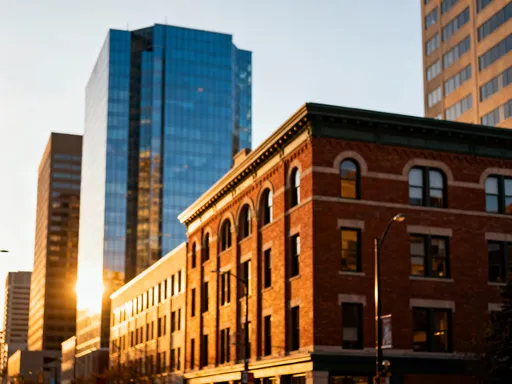
Downtown Calgary, often dismissed as a 9-to-5 business district, reveals unexpected depth upon closer inspection. The contrast between old and new is not jarring but conversational. On one block, a century-old bank building with Corinthian columns stands shoulder to shoulder with a minimalist office tower clad in reflective glass. In the Beltline, mid-rise residences blend heritage facades with contemporary infill, creating a streetscape that feels both rooted and forward-looking. Inglewood, once a working-class neighborhood on the brink of decline, now pulses with creative energy, its Victorian and Edwardian homes repurposed into boutiques, cafés, and art studios. These areas don’t just coexist—they complement, forming a mosaic of styles that reflect the city’s evolving identity.
What makes Calgary’s architecture particularly compelling is its refusal to conform to a single narrative. It doesn’t try to mimic Toronto’s density or Vancouver’s coastal minimalism. Instead, it carves out a distinct voice—one shaped by prairie light, seasonal extremes, and a history of rebuilding. The 1886 fire that destroyed much of early Calgary became a catalyst for architectural transformation, pushing the city toward more durable materials and thoughtful urban planning. This spirit of renewal continues today, not as a reaction to disaster, but as a deliberate act of cultural stewardship. The city’s skyline may be modest compared to other Canadian metropolises, but its streets tell a richer, more personal story.
The Legacy of Brick: Early 20th Century Foundations
The architectural soul of Calgary begins in the late 19th and early 20th centuries, when the city rose from ashes with a determination to build smarter and stronger. After the 1886 fire razed the original wooden structures, city leaders mandated brick and stone construction, setting the foundation for a built environment that valued durability and dignity. The result was a wave of commercial buildings that combined functionality with ornamental detail—structures that were not just fire-resistant but also beautiful. Today, these buildings form the backbone of Calgary’s historic core, particularly along Stephen Avenue Walk, a pedestrian-friendly stretch that serves as both a shopping destination and an open-air museum of early urban design.
One of the most iconic examples is the Lougheed Building, completed in 1912. With its red brick façade, terra cotta detailing, and imposing clock tower, it stands as a monument to Calgary’s early ambitions. Designed by architect Thomas W. Lawson, the building was once the tallest in the British Empire west of Toronto, a symbol of the city’s growing economic influence. Its Romanesque Revival style—with rounded arches, heavy stonework, and vertical emphasis—was both fashionable and functional, designed to convey stability and permanence. Today, the Lougheed Building houses retail and office spaces, its interiors modernized while its exterior remains meticulously preserved. Walking past it, one can’t help but feel the weight of history in its walls.
Stephen Avenue Walk, designated a National Historic Site of Canada, is lined with similar gems. The former Bank of Montreal building, with its grand Ionic columns and marble interior, now hosts a popular restaurant, its vault repurposed into a private dining room. The Hudson’s Bay building, a Beaux-Arts structure from 1913, retains its original façade even as its interior has been updated for modern retail. These buildings are not frozen relics; they are living parts of the city’s daily rhythm. Their continued use speaks to a broader philosophy in Calgary: that heritage is not something to be preserved behind glass, but something to be lived in and adapted.
The choice of materials—particularly brick and sandstone—was not merely practical but aesthetic. Sandstone, quarried locally from places like the nearby Paskapoo cliffs, gives many of these buildings a warm, honeyed glow, especially in the late afternoon. This connection to local geology grounds the architecture in place, making it distinctly Calgarian rather than imported. The craftsmanship, too, reveals a level of care that contrasts with today’s faster-paced construction. Cornices are intricately carved, window surrounds are deeply recessed, and entryways are framed with decorative ironwork. These details were not afterthoughts; they were expressions of civic pride.
Modern Reinvention: Adaptive Reuse in Action
Calgary’s architectural story does not end with preservation—it evolves through reinvention. The city has embraced adaptive reuse as a core strategy for urban development, transforming old structures into vibrant new spaces without erasing their past. This approach is both sustainable and emotionally resonant, allowing residents and visitors to experience history in a tangible, everyday way. Rather than demolishing aging buildings, Calgarians have learned to listen to them, to find new purposes within their walls that honor original craftsmanship while meeting contemporary needs.
A prime example is the National Music Centre, housed in the striking Fort Calgary building, which incorporates a retrofitted heritage structure alongside a bold new design. The center, known locally as Studio Bell, serves as a museum, performance venue, and educational hub for Canadian music. Its location in a historically significant area—near the original Fort Calgary site—adds layers of meaning. The integration of old and new is seamless: original brick walls stand beside sweeping curves of metal and glass, creating a dialogue between eras. Inside, recording studios and exhibition spaces are arranged to maximize natural light and acoustic integrity, proving that heritage buildings can meet modern technical standards without compromise.
Across the city, similar transformations are underway. In Inglewood, a former schoolhouse has been converted into artist studios and a community gallery. The building’s original hardwood floors and high ceilings remain, providing an inspiring environment for creativity. In the Beltline, a 1920s factory has been reimagined as loft-style condominiums, its exposed brick and timber beams preserved as design features. Even small-scale projects, like a former fire station turned café or a bank vault converted into a wine cellar, reflect a city that values continuity. These changes do more than save buildings—they strengthen neighborhoods by maintaining a sense of place and scale.
Adaptive reuse also aligns with growing environmental concerns. Demolition generates significant waste, while new construction consumes vast amounts of energy and materials. By retrofitting existing structures, Calgary reduces its carbon footprint and conserves resources. Moreover, these projects often prove more cost-effective in the long run, especially when historic tax incentives or grants are available. But beyond economics and ecology, there is a human benefit: people feel more connected to places that carry memory. A café in a former post office isn’t just a place to drink coffee—it’s a place where generations have gathered, where letters were sent, where community life unfolded. That intangible quality cannot be replicated in a brand-new building, no matter how stylish.
Contemporary Statements: Glass, Steel, and Skyward Dreams
While Calgary honors its past, it is not afraid to reach for the future. The city’s skyline has evolved dramatically since the early 2000s, with a new generation of towers redefining its profile. These buildings are not just taller—they are smarter, more sustainable, and more thoughtfully integrated into the urban fabric. The Bow Tower, completed in 2012, is the most prominent example. Standing at 236 meters, it is the tallest building in Calgary and one of the most energy-efficient skyscrapers in North America. Its curved façade, designed to reduce wind load and maximize natural light, reflects a deep understanding of the prairie environment. The building’s stepped form creates terraces that serve as communal spaces, blurring the line between interior and exterior.
The Telus Sky building, opened in 2019, further illustrates Calgary’s commitment to innovation. Designed by Bjarke Ingels Group (BIG), the tower features a dynamic pixelated façade that changes appearance depending on the angle and time of day. Its mixed-use design includes office space, residential units, and a public art gallery on the ground floor, ensuring that the building contributes to street-level vitality. Perhaps most notably, the tower incorporates a vertical art installation that spans its entire height, turning the building itself into a canvas. This fusion of architecture and art reflects a broader trend in Calgary: the belief that buildings should do more than house activities—they should inspire them.
What sets Calgary’s modern architecture apart is its responsiveness to context. Unlike cities where skyscrapers rise in isolation, Calgary’s new towers are designed with the pedestrian in mind. Plazas, arcades, and public art are integrated into their bases, creating inviting spaces even in winter. Architects have also paid close attention to solar orientation and wind patterns, shaping buildings to minimize energy use and maximize comfort. For instance, the east-west alignment of many towers reduces direct afternoon sun, lowering cooling demands. High-performance glazing and advanced insulation systems further enhance efficiency. These features are not marketed as luxury add-ons but as standard practice, reflecting a city-wide commitment to responsible design.
Local architects emphasize that boldness does not mean disregard for surroundings. In interviews and public talks, they speak of designing “with” the city, not “for” it—a subtle but important distinction. The goal is not to impose a foreign aesthetic but to extend Calgary’s architectural language in new directions. This contextual sensitivity ensures that even the most striking buildings feel like natural parts of the landscape, not alien intrusions. The result is a skyline that is both dynamic and coherent, where each new addition contributes to a larger narrative of growth and care.
Cultural Identity in Form: Indigenous and Western Influences
Architecture in Calgary is increasingly becoming a medium for cultural expression, particularly in the way it acknowledges and integrates Indigenous perspectives. This is not about superficial decoration or symbolic gestures, but about meaningful collaboration and design principles rooted in place. The Central Library, opened in 2018, stands as a landmark example. Designed by Snøhetta and DIALOG in partnership with local First Nations, the building’s form draws inspiration from the natural landscape—specifically, the eroded hoodoos of southern Alberta and the meeting of rivers at the site. Its curved, layered façade resembles sedimentary rock formations, grounding the structure in the region’s geological history.
More than its appearance, the library’s design process was transformative. Elders and knowledge keepers were involved from the beginning, ensuring that Indigenous values—such as circularity, inclusivity, and respect for the land—were embedded in the architecture. The building’s circular reading room, for instance, reflects the significance of the circle in many Indigenous cultures as a symbol of unity and continuity. Materials were chosen with care: wood from sustainably managed forests, stone from local quarries, and finishes that age gracefully over time. Even the orientation of the building takes into account solar paths and seasonal light, echoing traditional understandings of living in harmony with nature.
The Central Library is not an isolated case. Across the city, public institutions and private developers are beginning to consult with Indigenous communities during the design phase. This shift represents a deeper recognition that architecture shapes identity and belonging. When a building reflects the stories of the land and its original peoples, it fosters a sense of shared ownership. It tells residents and visitors alike: this place has deep roots, and everyone is welcome to be part of its future. This is not tokenism—it is reconciliation in built form.
At the same time, Western architectural traditions continue to play a role, creating a dialogue rather than a hierarchy. Modernist lines meet organic forms, steel frames support wooden lattices, and glass walls reflect both sky and earth. This synthesis is not forced but fluid, much like the city itself. Calgary, situated on the edge of the prairies and the mountains, has always been a place of convergence. Its architecture now reflects that duality—not as a conflict, but as a source of strength.
Neighborhood Nuances: Style Beyond the Core
To understand Calgary’s architectural character fully, one must venture beyond the downtown core. The city’s neighborhoods offer a rich tapestry of styles, each shaped by its era, geography, and community values. Kensington, for example, radiates a cottage-like charm with its low-slung homes, tree-lined streets, and independent shops housed in converted bungalows. The area’s walkability and human scale make it a favorite among families and creatives alike. Mission, developed in the early 20th century, features Tudor Revival homes with steep gables, half-timbering, and leaded glass windows—remnants of a time when European styles were aspirational. Sunnyside, once industrial, now blends restored heritage homes with avant-garde infill projects, creating a dynamic streetscape where old and new coexist in playful tension.
Each neighborhood tells a different chapter of the city’s story. In Bridgeland, early 1900s homes stand alongside contemporary townhouses, their front porches fostering neighborly interaction. In Mount Royal, university influence brings a mix of academic Gothic and mid-century modernism, with ivy-covered walls and clean-lined dormitories. These areas resist the homogenization that plagues many growing cities. Developers are encouraged—but not forced—to respect existing character, resulting in infill that complements rather than overwhelms. The city’s planning policies support this balance, emphasizing context-sensitive design and community input.
Walking through these neighborhoods feels like flipping through a living design album. You see how tastes changed over decades—from the ornate to the minimalist, from the grand to the intimate. Yet there is continuity in the attention to detail, the use of quality materials, and the prioritization of outdoor space. Even in newer developments, front yards, porches, and shared green spaces remain common, reflecting a cultural preference for connection and openness. This is not a city of fortress-like homes or endless parking lots; it is a city that values public life and human interaction.
For visitors, these neighborhoods offer a more personal way to experience Calgary. A morning coffee in a Kensington café, a stroll through Mission’s leafy lanes, or a visit to a Sunnyside gallery allows one to feel the city’s pulse at a slower, more intimate pace. These experiences are not marketed as tourist attractions, yet they are often the most memorable. They reveal a city that is not trying to be something it’s not—no forced charm, no artificial landmarks. Just real places, built for real people, evolving with care.
Why It Matters: The Quiet Power of Urban Design
Architecture is more than shelter; it shapes how we feel, move, and connect. Calgary’s architectural journey—from fire-ravaged frontier town to a city of thoughtful, layered design—demonstrates the quiet power of intentional urban planning. Its buildings do not shout for attention, but they speak volumes to those who take the time to look. They tell stories of resilience, innovation, and belonging. They remind us that cities are not just collections of structures, but living entities shaped by history, culture, and human aspiration.
What makes Calgary’s approach particularly inspiring is its balance. It does not abandon the old for the new, nor does it freeze itself in nostalgia. It adapts, reuses, and reimagines—values that resonate deeply with families, professionals, and long-time residents alike. For the 30- to 55-year-old woman who values stability, beauty, and authenticity, Calgary’s architecture offers a model of how cities can grow with grace. It proves that progress does not require erasure, that sustainability can be stylish, and that cultural respect can be built into brick and beam.
Travelers often come to Calgary as a stopover before the mountains. But those who linger discover a city worth seeing in its own right. They notice the way sunlight hits a sandstone wall in the late afternoon, how a repurposed factory hums with creativity, or how a library feels like a gathering place for the whole community. These moments are not grand or viral—they are quiet, lasting, and deeply human.
So the next time you walk through Calgary, look up. Notice the curve of a roofline, the texture of a façade, the way a building meets the sidewalk. Let yourself be surprised by the beauty that doesn’t announce itself. Because in a world of noise and haste, there is profound value in the quietly made, the thoughtfully preserved, the gently renewed. Calgary’s architecture may not be loud, but it is unforgettable—and that, perhaps, is the most powerful statement of all.