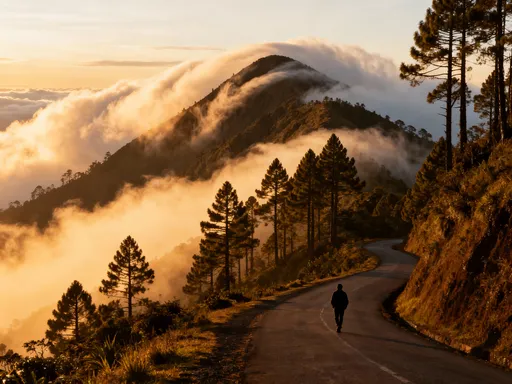
Lost in the Clouds: My Wild Ride Through San José’s Hidden Highlands
Have you ever felt nature whisper directly to your soul? That’s exactly what happened when I stepped into the misty highlands around San José, Costa Rica. Far from the bustling city streets, I discovered emerald valleys, steaming volcanoes, and cloud forests dripping with life. This isn’t just a trip—it’s a full sensory awakening. Let me take you where the mountains breathe and every trail tells a story. From the quiet hum of a mountain stream to the sudden flash of a resplendent quetzal’s wing, this journey redefines what it means to travel with intention. Here, beauty isn’t staged; it unfolds in real time, raw and unfiltered.
Arrival in San José – First Impressions Beyond the Capital
San José, the capital of Costa Rica, often surprises first-time visitors with its understated charm. Far from the chaotic capitals of other nations, this city hums with a calm efficiency, its streets lined with pastel-colored buildings, tree-shaded plazas, and the scent of fresh coffee drifting from corner cafés. Juan Santamaría International Airport, located just 20 kilometers west of the city center, serves as the gateway for most travelers. Though compact, the airport is modern and well-organized, with clear signage in English and Spanish, making navigation straightforward even for those unfamiliar with the region.
What many travelers don’t realize is that San José is not just an urban stopover—it’s a launchpad for some of the most breathtaking highland adventures in Central America. Within an hour’s drive, the tropical lowlands give way to cool, misty highlands where temperatures drop and the air grows crisp. This dramatic transition is one of Costa Rica’s best-kept secrets. While popular destinations like Monteverde and Arenal often dominate travel itineraries, the highlands surrounding San José offer equally stunning scenery with fewer crowds and a deeper sense of solitude.
Getting to the highlands is easier than many assume. Several well-maintained roads connect the capital to key mountain zones, with the Inter-American Highway (Carretera Interamericana) serving as the main artery. Renting a car is the most flexible option, especially for those planning to explore multiple destinations. Most major rental agencies operate at the airport, offering vehicles suited for both city driving and mountain terrain. For those hesitant about navigating foreign roads, private shuttles and guided tours are widely available and provide peace of mind, particularly on winding mountain routes.
First-time travelers should consider arriving in San José a day early to acclimate and explore the city before heading into the highlands. This allows time to visit cultural landmarks like the National Theater, the Pre-Columbian Gold Museum, or the bustling Central Market. These experiences ground the journey in Costa Rican history and daily life, creating a richer context for the natural wonders to come. More importantly, starting in the city helps manage travel fatigue, ensuring that when you finally climb into the mountains, you’re fully present to absorb every detail.
Cerro de la Muerte – Driving the Sky Highway
As the Inter-American Highway climbs eastward from San José, the landscape undergoes a quiet transformation. The humid air thins, the trees grow shorter, and a soft veil of fog begins to drift across the road. This is Cerro de la Muerte—the Mountain of Death—a name that sounds ominous but refers not to danger, but to the region’s historically challenging conditions for early travelers. At an elevation of over 3,000 meters (nearly 10,000 feet), it is the highest point on any paved road in Costa Rica, and driving through it feels like crossing into another world.
The terrain here is unlike any other in the country. Instead of tropical rainforest, you’ll see dense clusters of dwarf bamboo, gnarled oak trees, and shrubs that resemble mountain pine. The mist rolls in waves, obscuring and revealing the valleys below in a rhythm that feels almost meditative. On clear days, the views stretch for miles—endless ridges draped in green, with the occasional peak poking through the clouds like islands in a white sea. It’s a landscape that inspires stillness, urging drivers to slow down and simply breathe.
While the drive is scenic, it demands attention. The road is well-paved but narrow in places, with sharp curves and steep drop-offs. Weather can change rapidly; a sunny morning can give way to dense fog and light rain within minutes. Drivers are advised to reduce speed, use headlights, and avoid passing on blind curves. It’s also wise to check the weather forecast before departure and to carry extra layers—temperatures at this altitude can dip to near 10°C (50°F), even when it’s warm in the city.
One of the most delightful surprises along this route is the presence of roadside restaurants known for their hummingbird gardens. These small, family-run eateries hang dozens of feeders that attract a dazzling variety of hummingbirds—violet sabrewings, fiery-throated hummingbirds, and green-crowned brilliants, among others. Stopping for a warm cup of coffee or a plate of gallo pinto (a traditional rice and bean dish) becomes a moment of unexpected magic as these tiny, iridescent birds zip past your table. These stops are more than refreshment breaks—they’re living reminders of Costa Rica’s extraordinary biodiversity.
Tapantí National Park – The Rainforest That Feels Alive
Nestled along the slopes of the Talamanca Mountains, Tapantí National Park is a hidden gem that few international tourists ever visit. Unlike the more famous parks in Costa Rica, Tapantí remains refreshingly untouched, with minimal infrastructure and no entrance fees—though a small donation is encouraged to support conservation. This lack of commercialization is precisely what makes it so special. Here, the forest feels untamed, its rhythms dictated by rainfall, not tour schedules.
The park is part of the Greater Tapantí Conservation Area, which protects one of the largest remaining tracts of tropical montane rainforest in Central America. The canopy is dense and layered, with towering trees draped in mosses, orchids, and bromeliads. Streams cascade down the mountainside, feeding into the Río Grande de Orosí, a vital water source for nearby communities. The air is thick with moisture, carrying the earthy scent of damp soil and decaying leaves—a perfume of life in constant renewal.
One of the most striking aspects of Tapantí is its soundscape. In the early morning, the forest erupts with the calls of howler monkeys, their deep, guttural roars echoing through the valley like distant thunder. Birds flit through the understory—resplendent quetzals have been spotted here, though they are rare and elusive. More commonly seen are trogons, toucans, and the vibrant red-legged honeycreepers that dart between flowering trees. For those who walk quietly and look closely, the forest reveals its secrets: a glass frog clinging to a leaf, a three-toed sloth moving slowly through the branches, or a bullet ant marching along the forest floor.
Trails within the park are well-marked but minimally maintained, preserving the sense of adventure. The main trail, Sendero Principal, is a moderate 3.5-kilometer loop that winds through primary forest and crosses several footbridges over rushing streams. For the more adventurous, the Sendero Río Grande offers a longer, steeper descent to the riverbank, where swimming is possible in designated areas. Hikers should wear waterproof footwear, bring insect repellent, and carry plenty of water, as there are no facilities along the trails. Rain is common, so a lightweight rain jacket is essential. But even a downpour adds to the experience—the forest comes alive in the rain, with droplets bouncing off broad leaves and the sound of water filling every silence.
The Magic of Savegre Valley – Where Rivers Run Cold and Quetzals Hide
Just a short drive from Tapantí lies the Savegre Valley, a pristine corridor of protected wilderness that stretches from the highlands down into the Pacific lowlands. This valley is renowned for two things: its crystal-clear, ice-cold rivers and its status as one of the best places in the world to see the resplendent quetzal. The bird, revered by the ancient Maya and considered a symbol of freedom and beauty, nests in the high-altitude cloud forests between 2,000 and 3,000 meters. During the breeding season (March to June), guided birdwatching tours offer the best chance to catch a glimpse of its emerald-green plumage and long, flowing tail feathers.
What sets Savegre apart is its commitment to low-impact tourism. The lodges here are intentionally small, blending into the landscape with natural materials and solar power. Many operate as family-run eco-lodges, where guests are welcomed like old friends and meals are made from organic gardens on the property. There are no swimming pools, no loud music, no Wi-Fi in common areas—by design. The goal is not luxury in the traditional sense, but immersion. Guests wake to the sound of rushing water, dine under a canopy of stars, and fall asleep to the chorus of frogs and crickets.
The Savegre River itself is a marvel—its waters so clear you can see every stone on the riverbed, so cold it takes your breath away. It’s fed by mountain springs and glacial runoff, remaining icy even in the warmest months. While swimming is limited due to the temperature, many lodges offer natural stone pools where the water is slightly warmer and safe for soaking. Along the riverbanks, trails wind through dense forest, leading to waterfalls and hidden clearings. One popular hike, the Sendero Los Quetzales, connects several eco-lodges and passes through primary cloud forest, offering excellent birdwatching and panoramic views of the valley.
Sustainable practices are deeply embedded in the valley’s tourism model. Lodges follow strict waste management protocols, use composting toilets, and educate guests about watershed protection. Many participate in reforestation efforts and work with local communities to support environmental education. Visitors are encouraged to tread lightly—no single-use plastics, no loud noises, no straying from marked trails. This mindfulness isn’t enforced with rules, but with respect. Guests quickly learn that silence is not emptiness; it’s fullness—the space where nature speaks loudest.
Chirripó National Park – Conquering (or Admiring) Costa Rica’s Roof
Rising to 3,820 meters (12,533 feet), Mount Chirripó is the highest peak in Costa Rica and all of Central America. Its summit, known as La Cruz de Guía, offers one of the most breathtaking panoramic views on the continent—on a clear day, you can see both the Caribbean and Pacific coasts from the same vantage point. The journey to the top is not for the faint of heart. It requires a full day of strenuous hiking, high-altitude endurance, and advance planning. But even those who choose not to climb can feel the mountain’s presence—a quiet, ancient force shaping the land and the spirit of those who come near.
Access to Chirripó National Park is strictly regulated to protect its fragile ecosystem. All hikers must obtain a permit in advance through the official website of the Costa Rican National System of Conservation Areas (SINAC). Permits are limited to 150 per day, and they often sell out weeks in advance, especially during the dry season (December to April). The hike begins at the Los Crestones trailhead, following a well-marked but demanding 13-kilometer (8-mile) trail that gains over 1,800 meters in elevation. Most hikers start before dawn to reach the summit by sunrise, when the sky turns gold and the clouds below glow like liquid light.
For those not ready to attempt the summit, the base zone of the park offers shorter trails, birdwatching opportunities, and stunning views of the mountain’s lower slopes. The visitor center provides educational exhibits about the region’s geology, flora, and fauna. Guided interpretive walks are available and highly recommended for gaining a deeper understanding of the area’s ecological significance. Even a half-day visit can be profoundly moving—standing at the edge of a cloud forest, watching the mist swirl around ancient oaks, one begins to understand the mountain’s quiet power.
Physical preparation is essential for summit hikers. The high altitude can cause dizziness, nausea, or fatigue, especially for those coming from sea level. Experts recommend spending at least one night at a mid-elevation lodge (such as those in San Gerardo de Rivas) to acclimatize. Hikers should carry plenty of water, high-energy snacks, warm layers, and a headlamp. The weather is unpredictable—snow is rare but possible, and sudden storms can roll in without warning. Yet, despite the challenges, the emotional payoff is immense. Reaching the summit is not about ego or conquest; it’s about connection—to the earth, to the sky, to something greater than oneself.
Local Encounters – Farmers, Guides, and the Heart of the Highlands
Beyond the trails and vistas, the true soul of the highlands lies in its people. In villages like San Gerardo de Dota, San Antonio de Orosí, and El Empalme, life moves at a different pace—one shaped by the seasons, the land, and generations of quiet resilience. These communities are not tourist attractions; they are homes, farms, and gathering places where hospitality is offered freely and without expectation.
Many families in the region earn their livelihood from sustainable agriculture. Coffee farming, in particular, has deep roots here. The cool, misty slopes are ideal for growing Arabica beans, and smallholder farmers take pride in their craft. Visiting a family-run coffee farm offers more than a tour—it’s a lesson in patience, care, and connection to the land. Guests learn how beans are hand-picked, sun-dried, and roasted in small batches, often using traditional methods passed down for generations. The resulting coffee is rich, floral, and deeply satisfying—a world apart from mass-produced blends.
Local guides are another vital part of the experience. Many are born and raised in the highlands, with an intimate knowledge of the terrain, weather patterns, and wildlife. Their guidance goes beyond navigation; they share stories, point out medicinal plants, and teach visitors how to listen to the forest. One guide in Savegre Valley once paused mid-trail to show a group a tiny tree frog, no bigger than a thumbnail, perfectly camouflaged on a leaf. “She’s a mother,” he whispered. “She’s guarding her eggs.” That moment of quiet reverence stayed with the travelers long after the hike ended.
These encounters are not staged for tourists. There are no performances, no costumes, no artificial displays. Instead, there is authenticity—a willingness to share life as it is lived. A grandmother offering a basket of freshly picked strawberries, a farmer inviting you to try his homemade cheese, a child waving from a schoolyard—all of these moments weave together into a deeper understanding of place. They remind us that travel is not just about seeing new landscapes, but about connecting with the people who call them home.
Why This Journey Changes How You See Nature
Traveling through the highlands around San José does more than fill a camera roll—it changes the way you see the world. In a time when tourism often means rushing from one landmark to the next, this journey invites slowness. It asks you to pause, to listen, to notice the small things: the way light filters through moss-covered branches, the sound of a river carving stone, the feel of cool air on your skin at dawn. These moments, seemingly insignificant, accumulate into a profound shift in awareness.
The highlands teach humility. They remind us that nature operates on its own timeline, indifferent to our schedules and desires. A trail may be closed due to rain. A bird may remain hidden. A view may be obscured by fog. Yet, in these “missed” moments, there is grace. The forest does not perform; it simply exists. And in learning to accept that, we learn to be present.
This kind of travel also fosters responsibility. When you see a hummingbird sipping nectar from a flower you helped plant during a reforestation activity, or when you drink water from a stream protected by community efforts, you understand that conservation is not abstract—it’s personal. The choices we make as travelers have real consequences. Choosing eco-lodges, respecting trail rules, supporting local businesses—these are not small acts. They are the foundation of sustainable tourism.
Most importantly, the highlands awaken a sense of wonder that many of us lose in daily life. They remind us that beauty exists not in perfection, but in authenticity. That connection is not found in constant connectivity, but in silence. That the most meaningful journeys are not measured in miles, but in moments of clarity, peace, and gratitude.
So, if you’re ready to step off the beaten path, to trade noise for stillness, and to let the mountains speak to you—then the highlands await. They do not promise ease, but they offer something far greater: truth. And in that truth, there is transformation. Let this journey be more than a vacation. Let it be a return—to nature, to yourself, and to the quiet magic that still exists, high above the clouds.